
Machine Learning Applied to Sales: Prediction and Forecast is the last post in our series on Machine Learning applied to business.
In it, we objectively explore how these algorithms can help you make better decisions and obtain excellent commercial results.
We will talk about Supervised Machine Learning Methods, and if you are not yet familiar with the topic, we recommend reading it as well:
“What is Machine Learning and its application in business”
As we focus on bringing valuable insights, we will present some reference cases of using Machine Learning for forecasting in sales.
Remember that you can also access some videos on the topic on our YouTube channel.
In it, we visually explore the application of Machine Learning in various business processes.
So, if you haven’t accessed YouTube yet, take the opportunity to do so now, and don’t forget to subscribe to the channel and activate the “bell”.
This will help you stay up to date with our content.
Machine Learning applied to business.
For those of you who arrived at our blog for the first time, let’s do a quick summary of Machine Learning applied to sales.
Machine Learning is a set of algorithms capable of learning from a database and providing valuable insights much faster and more accurately.
From there, several companies have used supervised and unsupervised methods to:
- make predictions
- group and classify data
- facilitate the decision-making process,
- focus on specific areas and customers.

Machine Learning and its application to predicitions from regressions
As we can read in the article “How to Win with Machine Learning” by HBR, one of the main objectives of companies when using Machine Learning is to respect standards in a database.
From these, specifically created standards that help close more deals, increase your revenue, or even improve your operational capacity.
In Machine Learning, a prediction is output information obtained from algorithms in a training database.
This information is validated in a test database to verify its accuracy.
One of the biggest challenges in this process is having a quality database to train the algorithm and thus increase the accuracy of the solutions created.
Throughout our career, we have come across several ways of predicting results from data, for example:
- Linear regression,
- Polynomial regression
- Logistic regression, among others.
With greater digital transformation in companies, many teams are applying Machine Learning to improve their forecasting process.
And thus apply it directly to various business objectives seeking a solid competitive advantage.
Now that we know a little about applied Machine Learning from a business perspective let’s explore some reference cases that provide powerful insights.
Machine Learning applied in sales for predictions – Reference Cases.
As we saw above, the extensive potential for using machine learning for coverage provides companies a tremendous competitive advantage.
Let’s now look at some reference cases in the area and understand how some companies have used this competitive advantage to grow their revenue.
Machine Learning helps aviation companies save 63 million dollars in two years
The first case we will bring is presented in the Gartner report 5 Ways that Machine Learning and Artificial Intelligence impact business results.

Foto de Emiel Molenaar na Unsplash
It is mentioned that an aviation company could save 63 million dollars in two years.
Using Machine Learning, this company was able to predict and reduce engine repair costs and estimate fuel consumption.
To do this, it used thousands of sensors to collect information for analysis, and today, this process is considered a revolutionary movement in this company.
Using Machine Learning to forecast sales from online reviews
An excellent data source about the quality of the service or product companies sell is their Google reviews page or other benefit.
With this in mind, researchers Chuan Zhang, Yu-Xin Tian, and Zhi-Ping Fan published an excellent article in the International Journal of Forecasting on using Machine Learning to predict sales based on online analytics and search engine data.
From the study of monthly sales forecast data for 14 car models, the team developed research in which they observed that the model they predicted could effectively improve the accuracy of disadvantages with excellent robustness.
The table below shows results from online review data for the 14 cars analyzed.
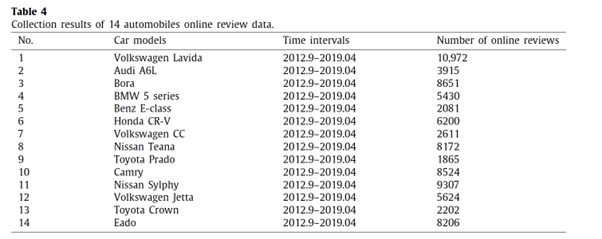
Results of applying machine learning for forecasting and forecasting
Table presented by the researchers with data from 14 vehicles used in the study
Below is an image of the model obtained by the team using Matlab software.
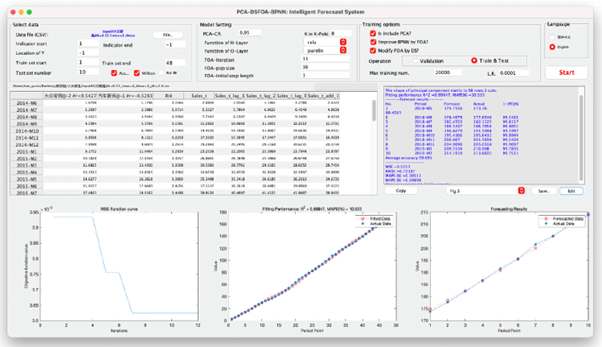
Machine Learning model applied in sales
Model built by the authors using MatLab
In this model, researchers achieved accuracy between 99.1% and 99.6% for prediction results.
Conclusion
As we saw in this article, the use of Machine Learning applied in sales to improve has helped companies save millions of dollars every year.
As well as predicting your sales with incredible accuracy.
Since we have more and more data available, companies must start using Machine Learning algorithms in their forecasting processes.
In addition to increasing your revenue, you can make decisions based on valuable insights that teams alone would take a long time to learn.
Although this series on Machine Learning applied to business comes to an end with this article, our content portal continues to bring you many insights.
So please take the opportunity to sign up for our newsletter and always receive our content firsthand.
0 comentários